Introduction
A custom jewelry MOQ is not simply the lowest quantity a supplier is willing to accept. It is the smallest production plan that can reliably use the selected material, finish, components, branding, and packaging. For a brand preparing a first collection, the useful question is therefore not “Can I buy 100 pieces?” but “What exactly can 100 pieces cover without creating an uncontrolled product mix?”
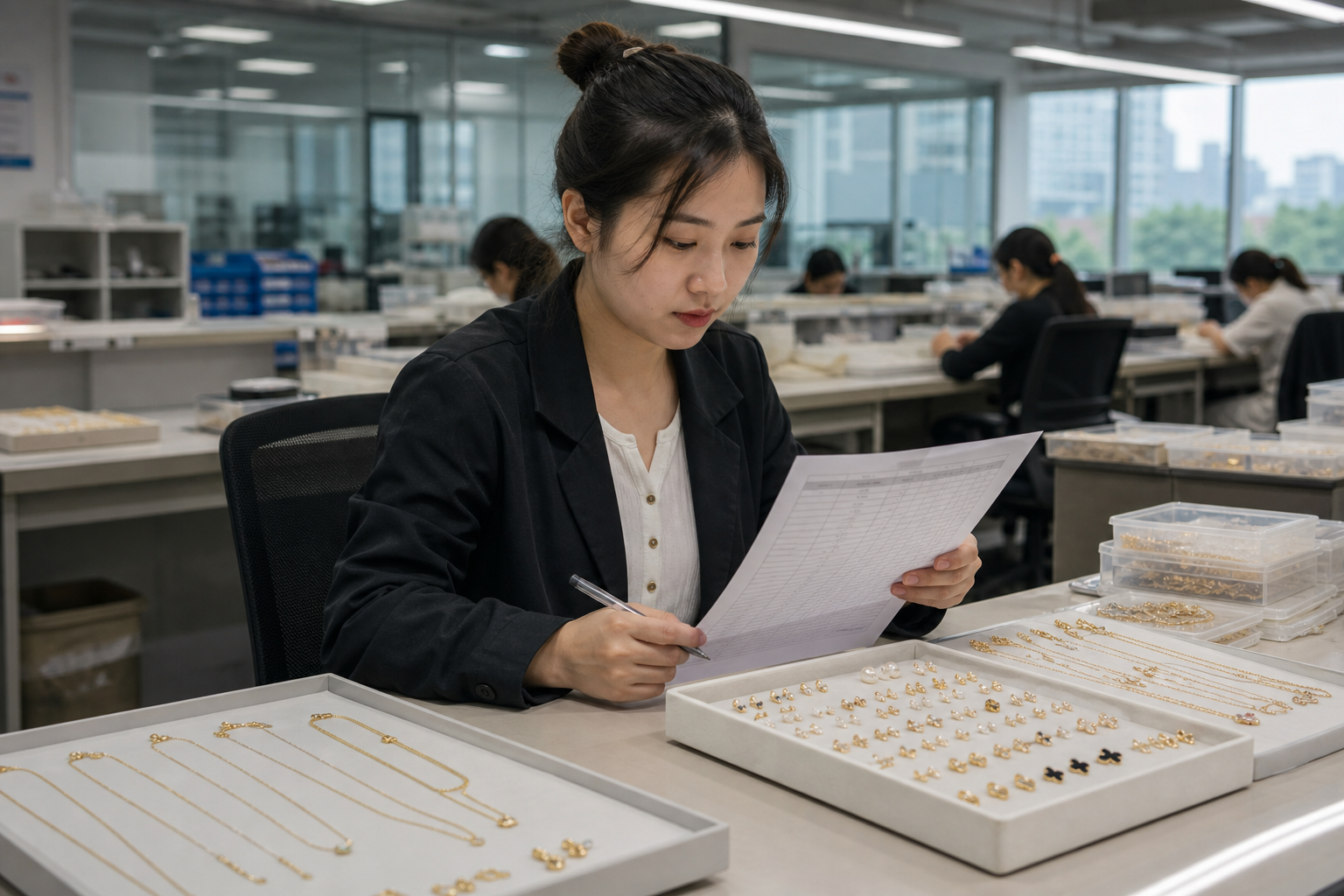
At OWGOW, the standard starting MOQ is 100 pieces, subject to the confirmed SKU and configuration. That is useful for launch planning, but it is not a blanket promise that every new mold, plating color, stone selection, or printed box can be split freely. This guide explains how a buyer can turn an MOQ conversation into a decision-ready order plan.
The short answer: what should a buyer confirm?
Confirm whether the MOQ applies per SKU, per color, per finish, per component family, or per packaging format. Then compare the resulting plan against your sales channel, launch calendar, expected replenishment pattern, and customer requirements. The MOQ should be written into the approved quotation, not inferred from a catalogue page.
Why MOQ changes between jewelry projects
Jewelry often combines several production inputs. A pendant may use a specific base metal, chain length, surface color, stone setting, logo tag, card, pouch, and carton divider. Each input can create a separate purchasing or process constraint. A factory may be able to assemble 100 finished units but still need a practical quantity for a unique charm, an uncommon finish, a custom chain, or printed packaging.
Three factors usually deserve attention:
1. SKU and variant structure
Start with the exact units you intend to sell. “Three necklace colors” might mean three SKUs, three finish batches, or one construction with interchangeable stones. Those are different production plans. A buyer should issue a simple table with product code, quantity, material, finish, stone or pearl, chain length, logo treatment, and packaging. It is far easier to evaluate a quote when every variant has its own line.
2. Shared production inputs
MOQ becomes more efficient when multiple products share compatible inputs. For example, a small collection may share one gold tone, one chain family, one pouch size, and one logo card. That does not mean every component can be mixed automatically; the supplier should confirm which inputs are genuinely shared. Treat “combined MOQ” as a question to verify, not a marketing label.
3. Custom development work
New molds, complex stone settings, uncommon materials, or special finishes can change the economics of a first order. Ask the factory to distinguish between an existing design with branding, a modified existing design, and a new development. The buyer can then decide where design investment is commercially justified.
Build a 100-piece launch plan before requesting price
An effective first brief has four layers.
| Layer | What to define | Why it matters |
|---|---|---|
| Product | SKU, photo or drawing, dimensions, material, finish | Prevents unlike quotations |
| Commercial | target market, channel, target price, estimated quantity | Connects the order to retail reality |
| Brand | logo, card, pouch, box, labeling | Identifies separate packaging minimums |
| Quality | approval criteria, critical defects, test needs | Sets the sample and inspection route |
During factory testing and sample review, avoid adding new requirements in informal messages without revising the brief. A changed clasp, finish, or card size can affect both MOQ and cost. The production reference should always show the latest revision.
A practical MOQ conversation with a supplier
Ask the supplier for three priced scenarios:
- One best-selling SKU at 100 units.
- A small assortment sharing the same finish and packaging.
- The same assortment with a new custom component or printed box.
For each scenario, ask what the MOQ covers and what is outside it. Request separate notes for tooling, component purchasing, branding, packaging, and testing. This does not make an order more complicated; it exposes assumptions before a deposit is paid.
The sample stage is the right time to check product application as well. A chain made for occasional wear may not suit a daily-wear positioning; a large ring may need size allocation; a pearl piece may need a different protective insert. The approved sample must reflect the order you plan to sell, not only the product photo you liked.
Where buyers lose money on a low MOQ
The highest risk is not always the unit price. It is a launch that carries too many small variants, must be reworked after sampling, or needs urgent freight because packaging was approved late. Avoid these common errors:
- dividing one order across too many finishes before demand is proven;
- assuming a new logo card or box has no separate production minimum;
- approving product appearance without checking fit, function, and packaging;
- treating a supplier’s general lead time as a confirmed shipping date; and
- failing to retain an approved sample and written product specification.
Installation preparation is relevant even for jewelry: confirm how pieces sit in the pouch or box, how chains are secured, and whether cards, labels, and protective materials are ready before packing begins. This reduces movement, tangling, and last-minute repacking.
Factory testing, inspection, and reorder readiness
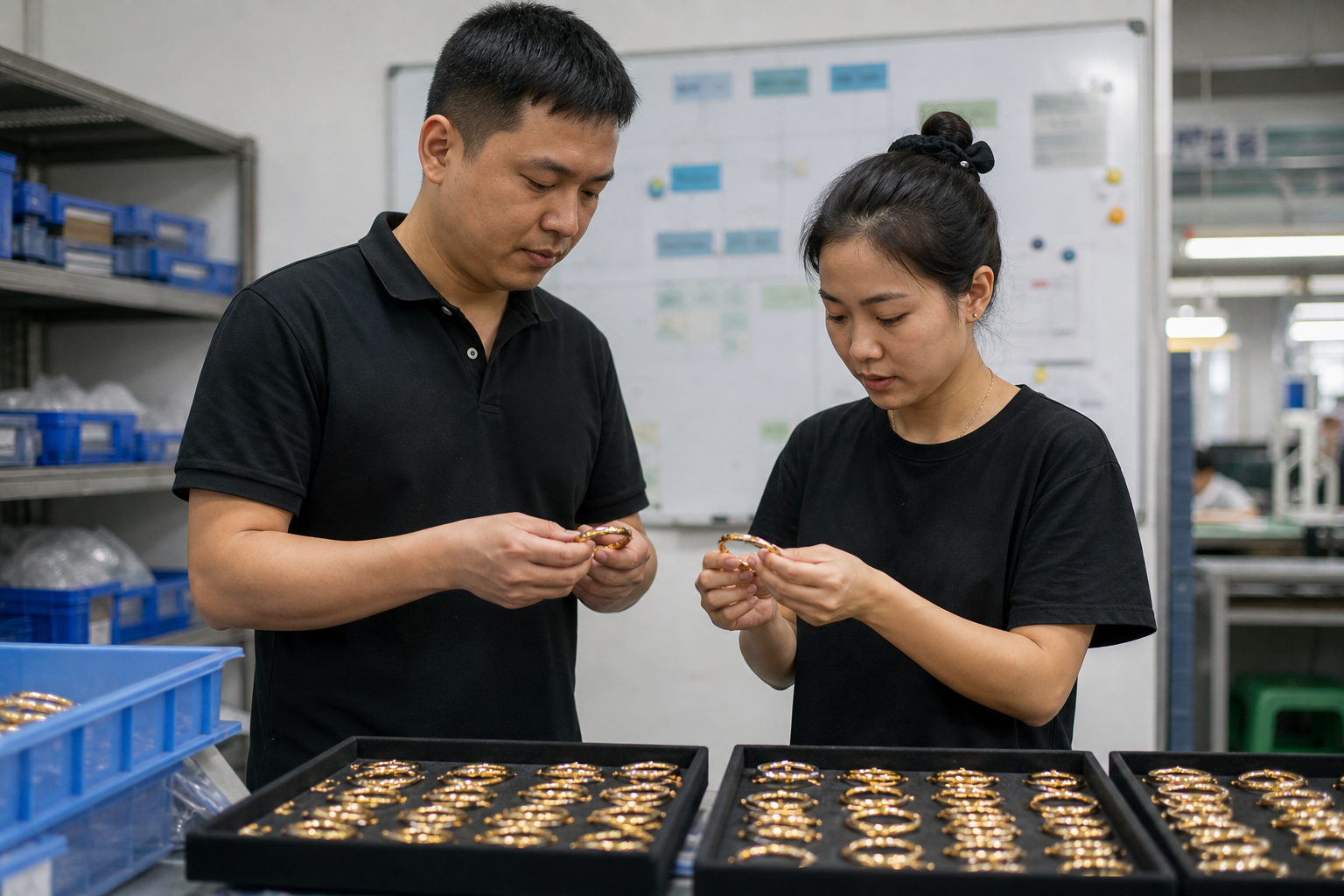
MOQ decisions should not bypass quality control. Agree what is checked at first-piece approval, during assembly, and during shipment inspection. The inspection record should compare finished pieces with the approved sample and cover visible finish, key dimensions, stone security, clasps, branding, packaging, quantity, and carton marks. If the buyer uses acceptance sampling, agree the method and the defect definitions before bulk work; ISO’s overview of ISO 2859-1 is a useful starting point for a shared vocabulary.
For a reorder, keep the approved sample, product code, images, material notes, finish description, packaging version, and any corrective-action record. Reorders become faster when the next order starts from a controlled reference rather than a new conversation.
FAQ
Can 100 pieces be split across several products?
It can be possible only when the supplier confirms which production inputs are shared. Ask for a written SKU, finish, component, and packaging breakdown rather than relying on a headline MOQ.
Does a smaller MOQ always cost more?
Not always in the same way. It can affect tooling allocation, component purchasing, set-up, finish batches, packaging, and inspection effort. Compare the total landed and operational cost, not only the unit price.
When should I finalize quantity?
Finalize the bulk quantity after the brief, sample, packaging, and commercial terms are aligned. If demand is uncertain, concentrate the first order on a smaller number of controlled variants.
Conclusion
The best MOQ is the smallest plan that still produces a coherent, sellable, inspectable collection. Define the SKU structure first, ask what each quantity applies to, approve the real product and packaging together, and document the order before bulk production. That process protects both the launch and the reorder.
CTA
Ready to plan a 100-piece jewelry launch? [Send Your Requirements](mailto:info@owgow.com) with your product list, target market, materials, and packaging expectations. For supplier selection steps, also read our private-label manufacturer checklist.